Monday, June 18, 2012


SECOND ANNOUNCEMENT OF READING NUMBERS

In the LAWRENCE GRANDKIDS SUMMER READING CONTEST

Carly's Boys
         Jaxson:  12
         Nasch:     9
         Graedy:   1
         Ryder:     1

Loni's Gang
          Judd:  20
          Wren: 11
          Ford:   5

                                                    Gentri's Babe
                                                             Leo:  10

The competition is really starting to heat up!  Keep Reading for PRIZES, PRIZES, PRIZES!

Love to you all, Grans

Thursday, June 14, 2012

First Announcement of Reading Numbers

In the LAWRENCE GRANDKIDS SUMMER READING CONTEST

Carly's Boys
         Jaxson:  12
         Nasch:     9
         Graedy:   1
         Ryder:     1

Loni's Gang
          Judd:  ?
          Wren: ?
          Ford:   ?

                                                    Gentri's Babe
                                                             Leo:  10

The competition is really starting to heat up!  Keep Reading for PRIZES, PRIZES, PRIZES!

Love to you all, Grans

Sunday, June 10, 2012

As all moms are involved in ongoing family research, and being a mom places me strongly in that category.  I have lately been doing some thinking about how important it is to protect what has historically been the nuclear family:  dad, mom, children.    Being a member of the LDS Church, I appreciate the values stated in the Proclamation on the Family.  I have found it interesting that the topic of family, and what is defined as a family has been a hot one in the last few years.  Recall Prop 8, and now the Presidential election has been skirting around this topic, too.  Interesting that President Obama stated he has no problem with same gender marriages.  With all this in mind, I read today's Editorial in the DesNews citing a recent study about families.  What an eye-opener.  If you wish to review it and be informed, here is the link:   http://desne.ws/JWoLm0

On a completely separate (yet equally important) topic, I wish to post the stats in our SUMMER READING CONTEST.  My daughters, I will text you for this week's reports!
 
     Here is an addition to the Rules of the Contest:

  •            Books on Gospel or Church topics are worth double points!
Now let's get to reading, everyone!


Tuesday, June 5, 2012

Lawrence Grandkids SUMMER READING CONTEST!

As summer is now here (yet not officially until June 21) it is time to announce the                                

                            Official Lawrence GrandKids 

                        SUMMER READING CONTEST!  

       
         Eligible people to enter:  Grandchildren of Matthew P. and Lori M. Lawrence
       
         Dates of Entry:  From June 5 to August 20, 2012       
        
 RULES OF CONTEST:  

  1. Read books, and report to your parents.  Tell them the name of the book and what you thought about it.  With some of you, it will be the parents who will be the readers...
  2. Parents, please report the numbers to me on Sundays.  The numbers for each Entrant will be posted on this blog on Sunday nights.  
          Why would 'ja want to enter this crazy contest?

                                                   --PRIZES!   There will be a prize for each entrant.  
                                                          Let's see how well you can all do in the contest.  


"If a man empties his purse into his head, no man can take it away from him. An investment in knowledge always pays the best interest." -- Benjamin Franklin


Thursday, March 22, 2012

It has been forever since I did a post!  I will say the reason is:  2 new grand babies,  Christmas, and a vacation.    Our count is now:  7 boys, 1 girl.  Gentri brought Leo Henry Green into the world on Nov.  Loni gave birth to Ford Lawrence Platt in Feb.  (See blog links)  It has been such a joy-filled time!  Over this time, I relearned that having babies is not for the faint of heart. Carly, Loni, and Gentri are all great mamas; are completely devoted to raising their little ones right.  I watch admiringly as they love and care for their growing families (and help when and wherever I can).

On a completely difference topic, today's post is about Skin Care.  The topic came up after a facial I had on the vacation.  You know,  a person can spend thousands on getting the right skin care products.  Being someone who enjoys the challenge of finding the best quality for best price, I did some research. which included a visit to the dermatologist.  Here is the info I gleaned:

  • CLEAN:  At every age, keep facial skin clean by cleansing night and morning.  Use a gentle cleanser which will hydrate your skin.  I have used Cetaphil lotion to cleanse, and baby soap when the budget didn't afford the Cetaphil.  The dermatologist recommended Cera Ve (2 types-foaming or gel) which Costco has for $10 and lasts about 4 months.
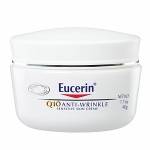
  • MOISTURIZE :  For years I have used Eucerin Cream which looks like Crisco in a tub before I went to bed, and just a touch of it in the morning under make-up.  Recently I discovered a Eucerin which has Q10 anti-oxidants in it--I use at night now  (Drugstore.com-$9.50) .  
  • PROTECT: Since my visits to the dermatologist have included having little skin cancers burned off my face each time I go (yeah, one right on the end of my nose--nice place for a huge scab for 2 weeks), I am now "on a mission" to have everyone use sunblock on their faces!  In the morning under make-up use Cetaphil spf50 ($10.50 Drugstore.com).  If I am working out in the yard, I will put it on at 4 hr intervals.  
  • ANTI-WRINKLE:  My skin didn't show much wrinkling until it changed (with the Change) when I turned 50.  In panic, I began to wrinkle overnight. The body produces less oils after this time.  My hands dried up like the Sahara--but that is a topic for another day....I turned to the anti-wrinkle creams, but found they cost a lot and do they really work??   In my research, I relearned about Retinol, a class of compounds that encompasses retinol, retinoic acid, retinyl palmitate, retinol aldehyde, and a host of others--are derivatives of vitamin A, one of the body's key nutrient needs.  
  • Imagine a skin-care ingredient which visibly smoothed out wrinkles and obliterated breakouts; improved skin texture and helps the skin replace lost collagen and stops future collagen breakdown.  and tightened pores into tiny little nothings.  It lessens the look of brown spots and sometimes helps reduce precancerous lesions.  It quite literally turns back the skin's clock to a glowier, more luminous past.  Miraculous, yes.  Imagine, too, that skieptics and researchers the world over had tested this ingredient exhaustively (since 1931 when isolated by Swiss chemist Paul Karrer--who rec'd the Nobel Peace Prize for it), scutinizing it for decades to see if it really could be as potent as it appeared--and it was.  If such an ingredient existed, who would not dash off to the nearest store and snatch it off the shelf.   "The best anti-ager is sunscreen; the next is vitamin A  Nothing else approaches it.  Retinoids trigger change in the skin to make it look clearer and more youthful; they actually help skin get back to a healthier place.  And there's strong, strong clinical data behind that."(Jennifer Linder, M.D., dermatologist--and virtually all skin-care experts agree)  So.......there are many products on the scene which include retinol.  But which ones are best, and which concentration of it is best?  You can spend a fortune finding this out, or just visit the dermatologist and he will write a prescription for retin A (or Tretinoin Cream) at a (cost of $17  to Costco) and you are set.      Turns out that retinol also sloughs off top layer of dead skin cells, so scrubs are not necessary.                                                                           

Thursday, October 13, 2011

APPLES TIME--BON APPETIT!

I recently was invited to share a demonstration with the residents at our local assisted living home.  Probably because Matt's father, David Lawrence, is now living there.  (He thought he would hate it, but really seems to love it there!  So many people to talk with...) I decided something with a fall fruit would be relatible and hopefully enjoyable to them all.  Thus, the Apple Dip Demonstration was born.  I have included it--with recipes-- as this time's post.  Try any or all with your family and Bon Appetit!  
(Wikipedia Online) The apple is the pomaceous fruit of the apple tree, species Malus domestica in the rose family (Rosaceae). It is one of the most widely cultivated tree fruits, and the most widely known of the many members of genus Malus that are used by humans.
The tree originated in Western Asia, where its wild ancestor, the Alma, is still found today. There are more than 7,500 known cultivars of apples, resulting in a range of desired characteristics. Cultivars vary in their yield and the ultimate size of the tree, even when grown on the same rootstock.
At least 55 million tonnes of apples were grown worldwide in 2005, with a value of about $10 billion. China produced about 35% of this total.  The United States is the second-leading producer, with more than 7.5% of world production. Iran is third, followed by Turkey, Russia, Italy and India.
Apples were brought to North America with colonists in the 17th century, and the first apple orchard on the North American continent was said to be near Boston in 1625. In the 20th century, irrigation projects in Washington state began and allowed the development of the multibillion dollar fruit industry, of which the apple is the leading species.
The apple was thus considered, in ancient Greece, to be sacred to Aphrodite, and to throw an apple at someone was to symbolically declare one's love; and similarly, to catch it was to symbolically show one's acceptance of that love.  An epigram claiming authorship by Plato states:
“I throw the apple at you, and if you are willing to love me, take it and share your girlhood with me; but if your          thoughts are what I pray they are not, even then take it, and consider how short-lived is beauty.”—Plato, Epigram VII[
Apples are often eaten raw; excepting the seeds, which are slightly poisonous (see below), the whole fruit including the skin is suitable for human consumption. Varieties bred for this purpose are termed dessert or table apples.
Apples can be canned or juiced. They are milled to produce apple cider (non-alcoholic, sweet cider) and filtered for apple juice. The juice can be fermented to make cider (alcoholic, hard cider), ciderkin, and vinegar. Through distillation, various alcoholic beverages can be produced, such as applejack, Calvados, ] and apfelwein. Pectin and apple seed oil may also be produced.
Apples are an important ingredient in many desserts, such as apple pie, apple crumble, apple crisp and apple cake. They are often eaten baked or stewed, and they can also be dried and eaten or reconstituted (soaked in water, alcohol or some other liquid) for later use. Puréed apples are generally known as apple sauce. Apples are also made into apple butter and apple jelly. They are also used (cooked) in meat dishes.
§  In the UK, a toffee apple is a traditional confection made by coating an apple in hot toffee and allowing it to cool. Similar treats in the US are candy apples (coated in a hard shell of crystallised sugar syrup), and caramel apples, coated with cooled caramel.
§  Apples are eaten with honey at the Jewish New Year of Rosh Hashanah to symbolize a sweet new year.
§  Farms with apple orchards may open them to the public, so consumers may themselves pick the apples they will buy.
Sliced apples turn brown with exposure to air due to the conversion of natural phenolic substances into melanin upon exposure to oxygen.  Different cultivars vary in their propensity to brown after slicing.  Sliced fruit can be treated with acidulated water to prevent this effect.
Organic apples are commonly produced in the United States.  Organic production is difficult in Europe, though a few orchards have done so with commercial success,  using disease-resistant cultivars and the very best cultural controls. The latest tool in the organic repertoire is a spray of a light coating of kaolin clay, which forms a physical barrier to some pests, and also helps prevent apple sun scald.
The proverb "An apple a day keeps the doctor away.", addressing the health effects of the fruit, dates from 19th century Wales. Research suggests that apples may reduce the risk ofcolon cancer, prostate cancer and lung cancer.  Compared to many other fruits and vegetables, apples contain relatively low amounts of vitamin C, but are a rich source of otherantioxidant compounds.  The fiber content, while less than in most other fruits, helps regulate bowel movements and may thus reduce the risk of colon cancer. They may also help withheart disease,  weight loss,  and controlling cholesterol. The fiber contained in apples reduces cholesterol by preventing reabsorption, and (like most fruits and vegetables) they are bulky for their caloric content.
There is evidence from laboratory experiments that apples possess phenolic compounds which may be cancer-protective and demonstrate antioxidant activity. The predominant phenolic phytochemicals in apples are quercetin, epicatechin, and procyanidin B2.
Apple juice concentrate has been found to increase the production of the neurotransmitter acetylcholine in mice, providing a potential mechanism for the "prevention of the decline in cognitive performance that accompanies dietary and genetic deficiencies and aging." Other studies have shown an "alleviation of oxidative damage and cognitive decline" in mice after the administration of apple juice.  Researchers at the Chinese University of Hong Kong discovered that fruit flies who were fed an apple extract lived 10% longer than other flies who were fed a normal diet.
However, apple seeds are mildly poisonous, containing a small amount of amygdalin, a cyanogenic glycoside. It usually is not enough to be dangerous to humans, but can deter birds.

Honeycrisp (Malus domestica 'Honeycrisp') is an apple cultivar developed at the Minnesota Agricultural Experiment Station's Horticultural Research Center at the University of Minnesota, Twin Cities. Designated in 1974 as the MN 1711, and released in 1991, the Honeycrisp, once slated to be discarded, has rapidly become a prized commercial commodity, as its sweetness, firmness, and tartness make it an ideal apple for eating raw. The Honeycrisp also retains its pigment well and boasts a relatively long shelf life when stored in cool, dry conditions.
U.S. Plant Patent 7197 and Report 225-1992 (AD-MR-5877-B) from the Horticultural Research Center indicate that the Honeycrisp is a hybrid of the apple cultivars Macoun and Honeygold. However, genetic fingerprintingconducted by a group of researchers in 2004, which included those who were later attributed on the patent, determined that neither of these cultivars is a parent of the Honeycrisp, but that the Keepsake (another apple developed by the same University of Minnesota crossbreeding program) is one of the parents. The other parent has not been identified, but it might be a numbered selection that could have been discarded since.  According to the US Patent office, the Patent was filed November 7, 1988. As a result, the patent has now expired.
For the sake of commercial production, Honeycrisp apple trees are not self-fruitful, as trees grown from the seeds of Honeycrisp apples will be hybrids of Honeycrisp and the pollinator.
In 2006, the Andersen Elementary school in Bayport petitioned for the Minnesota state legislature to make the Honeycrisp apple the state fruit; the bill was passed in May 2006.
As a result of the Honeycrisp apple's growing popularity, the government of Nova Scotia has encouraged its local orchards to increase their supplies through the Honeycrisp Orchard Renewal Program. From 2005 until 2010, apple producers in Nova Scotia can replace older apple trees with Honeycrisp trees at a subsidized rate. Many orchards in the Annapolis Valley on the Bay of Fundy have mature trees and plentiful supplies of Honeycrisps throughout the harvest season. Apple growers in New Zealand's South Island are looking to start growing Honeycrisp to supply consumers during the US off season.


Gala apples are small and are usually red with a portion being greenish or yellow-green, vertically striped. Gala apples are fairly resistant to bruising and are sweet, grainy, with a mild flavor and a thinner skin than most apples. Quality indices include firmness, crispness, and sweetness.

History

The first Gala apple tree was one of many seedlings resulting from a cross between a Golden Delicious and a Kidd's Orange Red planted in New Zealand in the 1930s by orchardist J.H. Kidd. Donald W. McKenzie, an employee of Stark Bros Nursery, obtained a US plant patent for the cultivar on October 15, 1974.  The variety is also an increasingly popular option for UK top fruit farmers. It is a relatively new introduction to the UK, first planted in commercial volumes during the 1980s. The variety now represents about 20% of the total volume of the commercial production of eating apples grown in the UK, often replacing Cox's Orange Pippin.


Jonagold is a cultivar of apple, a cross between Golden Delicious and Jonathan which was developed in 1953 in New York. They form a large sweet fruit with a thin skin. Because of their large size they are now favoured by commercial growers in many parts of the world. Jonagold is triploid, and as such requires a second type of apple for pollen and is incapable of providing pollen for other trees. The Jonagored Apple, a sport mutation of Jonagold, was once covered under United States Patent PP05937, now expired.
Jonagold has a green-yellow basic color with crimson, brindled covering colour.
The apple has a fluffily crisp fruit. It is juicy and aromatic and has a sweet-sour taste.

Dip Recipes:
CARAMEL  APPLE(Fruit)  DIP

1 (8 oz.) pkg. cream cheese, softened
3/4 c. brown sugar
1/4 c. white sugar
1 tsp. vanilla
1/2 to 1 tsp. caramel extract
1/2 c. chopped walnuts (optional)
Mix together and use as a dip for apple slices.
CREAM  CHEESE  FALL  APPLE(Fruit)  DIP

1 (8 oz.) pkg. cream cheese, softened
3/4 c. brown sugar
1 tsp. vanilla
8 oz. praline nut mix
Granny Smith apples, unpeeled
Pineapple juice
Blend cream cheese with brown sugar and vanilla. Add nut mix. Wash and slice apples. Dip in pineapple juice before setting on serving tray with dip.
CHOCOLATE  APPLE (Fruit) DIP

5 sq. (5 oz.) semi-sweet chocolate, coarsely chopped
1/2 of a 14 oz. can sweetened condensed milk
1/4 c. milk
Assorted cut up fruit to dip
Assorted cookies or cake cubes to dip
In a heavy saucepan, melt chocolate over low heat, stirring constantly. Stir in condensed milk until smooth. Add regular milk. Blend well. Pour into serving dish. Arrange fruit and cookies around and place toothpicks in fruit to dip. Makes about 1 1/3 cups.
GREEK  YOGURT  DIP  FOR  FRUIT

3/4 c. greek honey flavored yogurt
1 tbsp. fresh lemon juice
2 tbsp. powdered sugar
Put yogurt, powdered sugar and lemon juice in a bowl and mix with a spoon until smooth. Chill the dip in the refrigerator and serve with fresh fruit. Makes 4 servings.
Homemade  CHEESE  WHIZ  for  canning

1 lb. grated American cheese
1/2 tsp. salt
1 tsp. Worcestershire sauce
1 lg. can evaporated milk
1/8 tsp. dry mustard
Cook over double boiler until creamy. Stir often. Use wire whip. Pour into jar while still very hot. Makes 2 large size Cheese Whiz jars.
PEANUT  BUTTER  FRUIT  DIP

1/2 c. creamy peanut butter
1/4 c. milk
8 oz. carton sour cream
1 tsp. cinnamon
2 tbsp. honey
In medium bowl stir together all ingredients until smooth. Use as dip for fruit. Yield: 1 1/2 cups.
Granny Smith apples are especially good for this. Other fruit such as pear slices, banana chunks, strawberries, etc. can be used.

HOMEMADE YOGURT


Yogurt making is a fun and creative experience and an excellent quality yogurt may easily be made at home at a great savings over store bought.
Any kind of yogurt containing live active cultures may be used as a starter, such as ACTIVIA®, DANACTIVE®, Greek Yogurts, Kefir, etc. Try different brands to suit your needs and to find those that yield the best results.
In making yogurt, it's especially important that all utensils and equipment be scrupulously clean to create a friendly environment for the yogurt culture to thrive without competition.
Homemade Yogurt:
1 quart milk
1/4 to 1/2 cup non-fat dry milk powder
1/2 cup plain unflavored yogurt (such as ACTIVIA®)
2 tablespoons cream (optional)
In a medium saucepan, combine all ingredients except yogurt. Two tablespoons of cream (or more) may be added to the basic recipe for a richer, creamier dessert yogurt or frozen yogurts. For everyday yogurt or yogurt that is to be used in baking, the extra richness is not needed.
Heat milk, uncovered, over low heat, gradually bringing it nearly to a boil. Tiny bubbles will form around the edges of the pan; the milk should reach a temperature between 185-190°F.
If the milk is brought up to temperature too quickly, the bottom of the pan is likely to scald. It is important not to allow the milk to boil. Remove any milk which forms a skin on the surface.
Remove from heat and allow milk to cool for about 20 minutes, or until the milk reaches a temperature of between 100-110°F. Stir in approximately 1/2 cup of active live culture yogurt or yogurt starter.
Transfer the yogurt mixture to a good quality thermos or a yogurt makerand maintain the temperature of about 100°F for 4-10 hours. A longer fermentation period will yield a more tart yogurt. Leave the yogurt undisturbed or it will not thicken well, and keep it free from drafts.
Refrigerate until ready to use. Flavor as desired, adding crushed, dried or fresh fruit or fruit cocktail, sunflower or pumpkin seeds, Grape-Nuts, blueberries, strawberries, raspberries, etc.
Use homemade yogurt for baking in any recipe calling for buttermilk, sour cream or yogurt; it adds wonderful flavor and nutrition to quick breads, muffins, pancakes and yeast breads.
Another useful purpose for homemade yogurt is yogurt cheese. To make yogurt cheese, drain freshly made yogurt in a cheesecloth hung in a cool place; this can be used in many recipes as a healthy substitute for cream cheese.
Save half a cup of the unflavored yogurt as a starter for making the next batch.
This yogurt is an economical way to produce quality yogurt for diet plans which include daily consumption. The starter only needs to be purchasedinfrequently in small amounts, and the yogurt strain can often be maintained indefinitely if you make yogurt often. Use each batch of reserved starter within 5 days or start again with fresh starter.
It's a good plan to purchase an 8 oz. container of yogurt for a new starter once every 1 or 2 months, or when your own strain seems to be getting weaker (the yogurt will not thicken as well). Dried active culture is also available in packets and may be kept on the shelf in case you run out of fresh starter.
Ball 1/2 pint can or freeze jars, either plastic or glass, make excellent single serve containers for storage. Some yogurt makers come with glass storage containers; others make 1 quart batches rather than single serve portions.